

Ethiopia volcano eruption: Emirates, Etihad and flydubai avoid disruptions despite ash concerns
UAE airports report on-time arrivals and departures
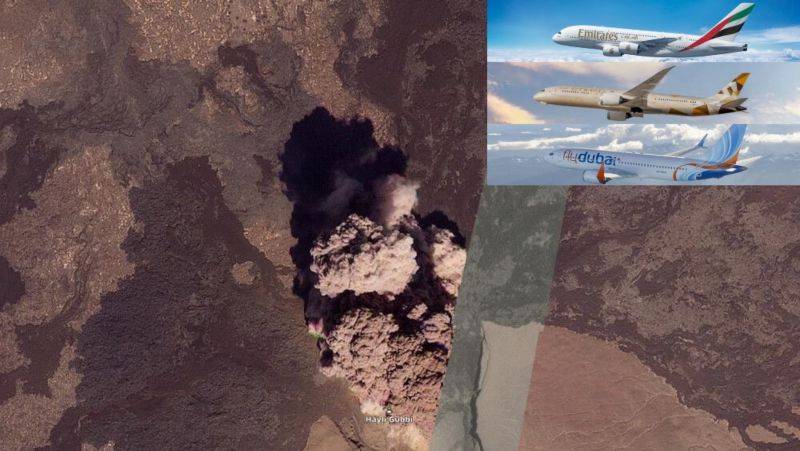
DUBAI – While airlines across India, the Gulf and parts of Africa grapple with flight cancellations and rerouting caused by the long-dormant Hayli Gubbi volcano eruption in Ethiopia, UAE carriers have reported normal operations.
Emirates, Etihad Airways and flydubai confirmed their flights were operating on schedule, including services to Addis Ababa and wider African destinations.
The eruption, which occurred for the first time in nearly 12,000 years, propelled ash clouds up to 45,000 feet across the Red Sea, Oman, Yemen, Pakistan and into India’s northern skies.
UAE airlines on schedule
Emirates, flydubai and Etihad Airways said there was no operational impact from the volcanic ash. Flights to and from Ethiopia were operating as normal from Dubai International Airport, with scheduled morning and later departures to Addis Ababa showing on-time performance.
Etihad Airlines confirmed awareness of the changing weather conditions affecting parts of the GCC and Asia but said all its flights remained on schedule.
The airlines reassured travellers that they were monitoring developments closely and urged passengers to keep their contact details updated to receive any flight alerts. Safety of passengers and crew remains the highest priority for UAE airlines as meteorological agencies continue tracking the ash plume.
Regional disruptions
In contrast, multiple airlines across India and the wider region confirmed cancellations and diversions. Air India suspended flights on November 24 and 25, including services from Dubai to Hyderabad, Chennai and Doha, as well as long-haul routes from New York and Newark to Delhi.
#ImportantAdvisory
— Air India (@airindia) November 25, 2025
The following Air India flights have been cancelled as we carry out precautionary checks on those aircraft which had flown over certain geographical locations after the Hayli Gubbi volcanic eruption.
Our ground teams across the network are keeping passengers…
IndiGo diverted its Kannur-Abu Dhabi flight to Ahmedabad, while its Cochin-Dubai service was grounded as a precaution.
Akasa Air cancelled flights to and from Jeddah, Kuwait and Abu Dhabi on November 24-25. Passengers were offered full refunds or complimentary rebooking.
#TravelUpdate We are closely monitoring the volcanic activity in Ethiopia and its potential impact on flight operations in nearby regions. Our teams will continue to assess the situation in compliance with international aviation advisories and safety protocols and take necessary…
— Akasa Air (@AkasaAir) November 24, 2025
KLM cancelled Amsterdam–Delhi flights, while various domestic Indian routes were affected as authorities advised airlines to avoid affected airspace.
Ethiopia volcano eruption
The eruption sent ash plumes drifting across Oman, Yemen, Saudi Arabia, northern Pakistan and India. The Oman Environment Authority confirmed detection of volcanic ash at 35,000 feet over parts of the Empty Quarter and Arabian Sea. Monitoring centres in Oman and Saudi Arabia continued to track ash movement, noting no air-quality health risks for the public.
India’s meteorological agencies reported that the ash plume was travelling at speeds up to 120 km/h between 15,000 and 45,000 feet. It was expected to enter western India on Tuesday evening, affecting Gujarat, Rajasthan, Delhi, Punjab and Himalayan regions. The cloud had begun drifting toward China later in the day, easing conditions in the Arabian Peninsula and South Asia.
FlightRadar24 confirmed that flights in the Gulf were not systematically affected, saying aircraft appeared to be flying above ash-contaminated levels. It noted the plume had mostly stabilised below cruising altitude for transcontinental services.
Current (black) and forecasted (green +6hr , yellow +12, red +18) ash cloud observations from today’s eruption of Hayli Gubbi volcano in northern Ethiopia. pic.twitter.com/96vtwvLD20
— Flightradar24 (@flightradar24) November 23, 2025
Saudi Arabia’s National Centre for Meteorology reported no threat to its skies and said monitoring would continue. Mumbai Airport issued a passenger advisory, warning of possible disruptions and urging travellers to check flight statuses before arriving at the airport.
Authorities in Oman activated the Environmental Emergency Centre, coordinating with health, civil defence and civil aviation bodies to monitor conditions round the clock.